Reliable network diagnostics are essential for maintaining stable and efficient industrial PROFIBUS communication.
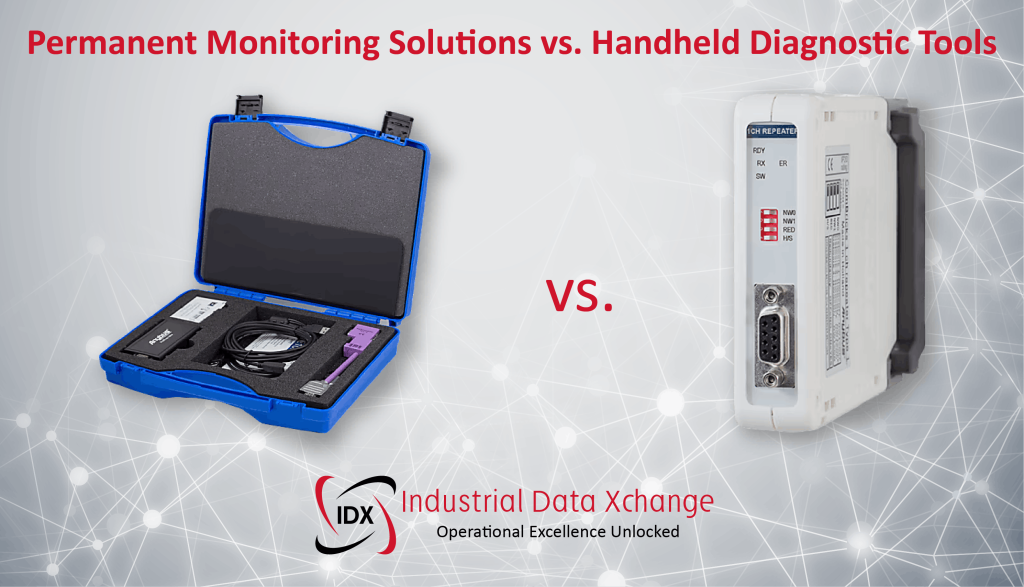
Permanent monitoring solutions like AnybusComBricks and handheld diagnostic tools such as Anybus ProfiTrace each offer unique advantages depending on your operational and maintenance requirements.
Here are the key differences between handheld diagnostic tools and permanent monitoring solutions:
Permanent Monitoring Solutions (e.g., Anybus ComBricks)
Advantages:
- Continuous Network Monitoring: Detects intermittent and long-term issues that a handheld tool might miss.
- Remote Access & Alerts: Allows maintenance teams to monitor the network remotely and receive alerts via email or dashboards.
- Predictive Maintenance: Helps identify network degradation trends over time, preventing failures before they happen.
- Automatic Data Logging: Stores historical network data, making it easier to analyse patterns and pinpoint recurring issues.
- Minimal Human Effort: Once installed, it provides automated insights without requiring constant manual checks.
Disadvantages:
- Higher Cost: More expensive upfront due to hardware, software, and potential subscription/licensing fees.
- Complex Installation: Requires integration into the PROFIBUS network, which may involve downtime during setup.
- Overhead in Management: May require additional IT infrastructure, training, and maintenance for long-term use.
- Possible Compatibility Issues: Some monitoring solutions may not support all devices or network configurations without additional setup.
Handheld Diagnostic Tools (e.g., Anybus ProfiTrace)
Advantages:
- Portability & Flexibility: Can be carried to different locations for on-the-spot troubleshooting.
- Cost-Effective: Generally cheaper than a permanent monitoring solution since it is a one-time purchase without additional infrastructure costs.
- Easy to Use: Simple plug-and-play functionality for quick analysis without requiring extensive installation.
- On-Demand Analysis: Ideal for periodic maintenance checks and immediate troubleshooting when issues arise.
- Quick Setup: No need for permanent network integration, making it ideal for ad-hoc diagnostics.
Disadvantages:
- No Continuous Monitoring: Only provides a snapshot of network health when connected, meaning intermittent issues might be missed.
- Manual Intervention Required: Someone has to be present to use the tool and analyse the data.
- Potential for Missed Issues: Problems that occur outside of inspection periods (e.g., at night or during high-load operations) may not be detected.
- Limited Data Logging: While some tools can store diagnostic data, they don’t provide long-term trend analysis like a permanent solution.
Which One Should You Choose?
Use a Permanent Monitoring Solution if:
- You need continuous network monitoring and predictive maintenance.
- Your network is critical, and downtime is costly.
- You want remote access and real-time alerts.
- You manage large-scale industrial PROFIBUS networks.
Use a Handheld Diagnostic Tool if:
- You only need periodic troubleshooting and maintenance.
- Your budget is limited.
- You prefer a portable, flexible solution for different locations.
Choosing between permanent monitoring solutions and handheld diagnostic tools depends on your network size, criticality, and maintenance strategy.
For optimal reliability, some companies use both: permanent monitoring for ongoing health checks and handheld tools for detailed troubleshooting when needed.
Not sure which solution is best suited to your application? Contact us for assistance selecting the right tool for your industrial environment.